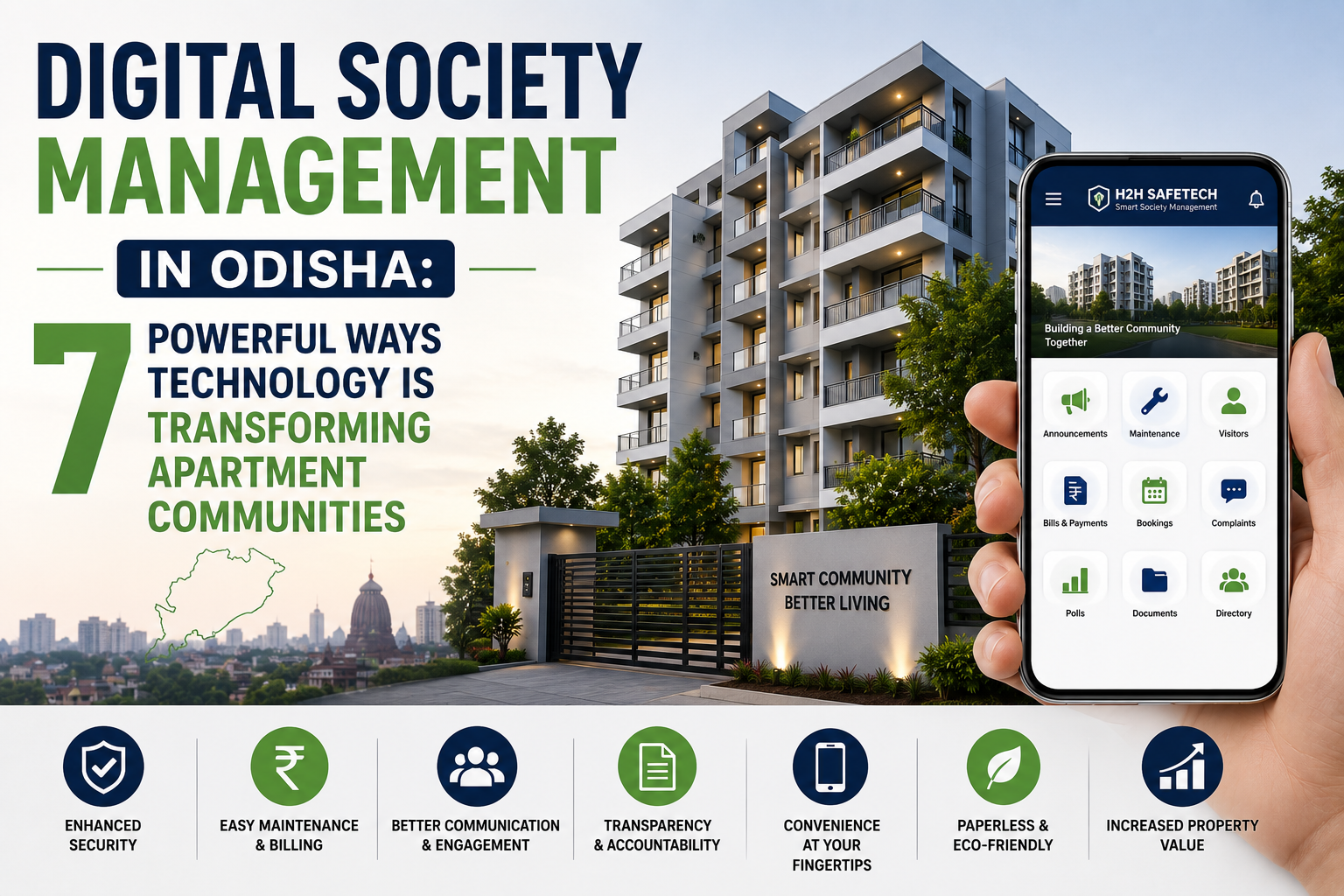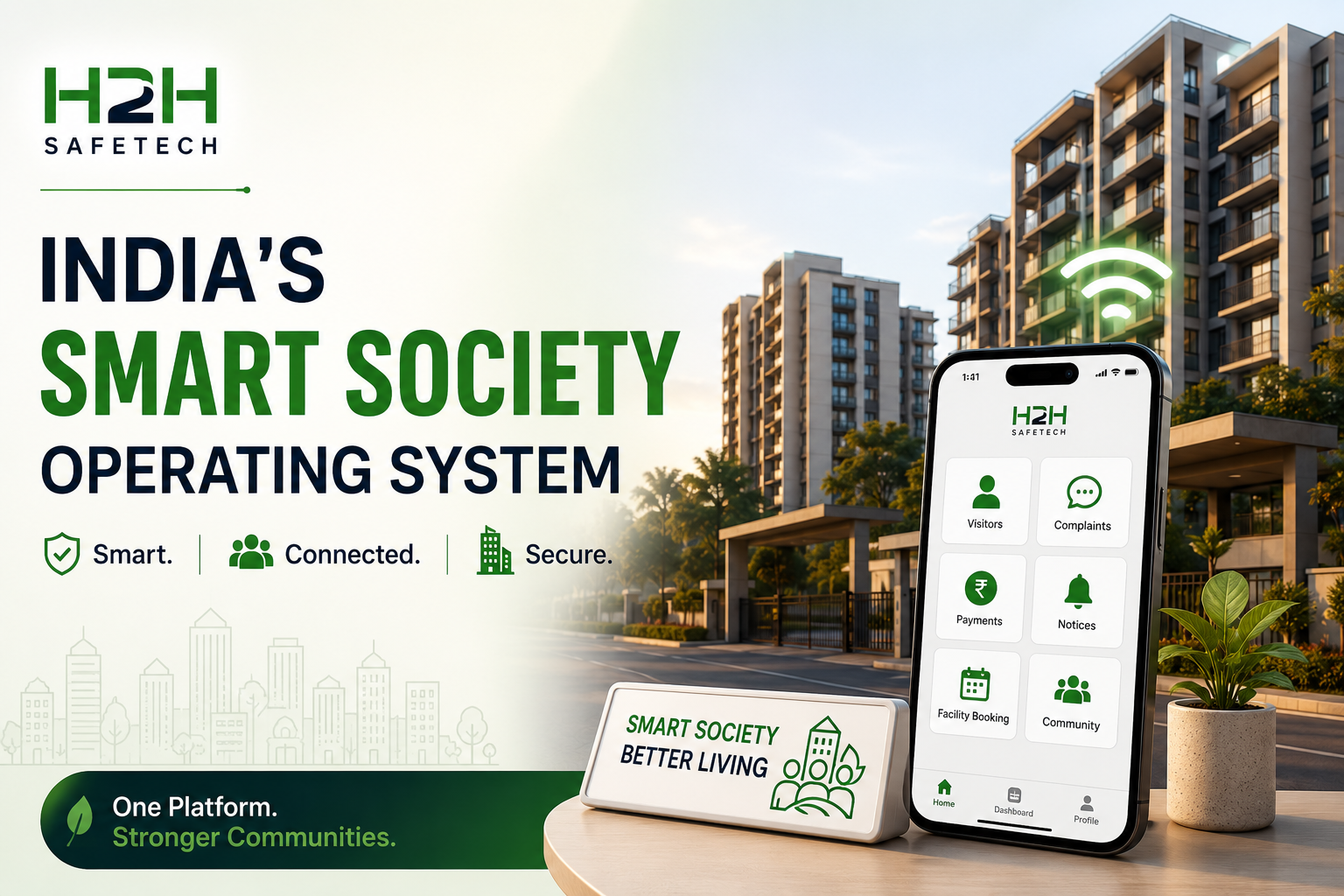
India's Smart Society Operating System is quietly becoming the backbone of how gated communities, apartment complexes, and RWAs function every day. Instead of a security register at the gate and a spreadsheet in the accountant's laptop, one connected platform now handles visitor entry, maintenance billing, complaints, and resident communication together.
This isn't a futuristic concept anymore. It's already running in real buildings, in real cities, solving real problems that every committee member and resident recognizes instantly.
Why India's Smart Society Operating System Matters to You Right Now
If you've ever chased a defaulting neighbor for maintenance dues, waited at a gate because the guard couldn't verify a visitor, or lost track of a complaint that never got closed — you've already felt the gap this system fills.
Why This Shift Is Happening Now
Urban India added enormous residential density in the last decade, and most of that growth happened in gated, multi-tower communities rather than standalone homes. Managing hundreds of units by hand simply stopped scaling.
At the same time, smartphone adoption among residents — including senior citizens — crossed a tipping point. A resident who orders groceries on an app has no patience for a paper notice board.
Three forces converged:
- Scale — societies grew from dozens of units to thousands
- Expectation — residents now expect app-based convenience everywhere
- Regulation — India's evolving data protection and financial transparency rules pushed manual record-keeping toward its limits
Together, these three forces created real demand for a connected, category-defining platform rather than another standalone app so India's Smart Society Operating System Can Be implement .
Core Modules Every Platform Should Have
Not every "society app" qualifies as an operating system. A true India's Smart Society Operating system connects every function of daily society life under one identity and one dataset. Here's what that actually looks like.
1. Visitor & Gate Management
Pre-approved passes, QR-based entry, and instant notifications to residents remove the guesswork security guards used to carry alone. Delivery staff, cabs, and domestic help all get verified without a phone call to every flat.
2. Billing & Accounting Automation
Maintenance bills, late fees, and utility charges should generate themselves on schedule — not get typed into a register every month. A proper system also produces a ledger, trial balance, and balance sheet automatically, ready for the next AGM.
3. Complaint and Maintenance Tracking
A complaint logged today shouldn't disappear into a WhatsApp group by next week. Job cards, staff assignment, and resolution evidence keep every ticket accountable from open to close.
4. Resident Communication
Notices, polls, and event updates reach the right audience — a tower, a committee, or the whole society — instead of getting buried in a forwarded message chain.
5. Asset and Facility Management
Lifts, pumps, and fire safety equipment need scheduled maintenance, not reactive repairs. QR-tagged assets with maintenance history protect both budgets and safety records.
6. Staff and Domestic Help Records
Attendance, verification, and entry logs for maids, drivers, and technical staff reduce both security risk and payroll disputes.
7. Facility Booking
Clubhouses, guest rooms, and community halls get booked through a calendar instead of a register at the security desk, cutting down double-bookings and dispute
The Compliance Backbone Nobody Talks About
Most conversations about society software focus on features. Few focus on what protects residents legally. This is where a genuine smart society platform earns its name.
India's data protection framework under the Digital Personal Data Protection Act requires any platform handling resident information — names, vehicle numbers, visitor photos — to follow purpose-based access, consent capture, and audit logging.
Payment flows also depend on gateways regulated by the Reserve Bank of India, meaning KYC, settlement, and refund handling must sit with an authorized provider, not the society app itself.
A platform that ignores these requirements isn't actually a smart society operating system — it's a liability waiting to surface at the worst possible time, often during an audit or a resident dispute.
What "Compliance-Ready" Should Actually Mean
- Role-based access so only authorized admins see financial or personal data
- Encrypted storage for documents and resident records
- Multi-factor authentication for admin and treasurer accounts
- Exportable, deletable records on request, in line with data protection norms
What Should You Actually Budget?
This is where many committees get surprised. Pricing for society management software in India ranges wildly — from a few thousand rupees a month for an off-the-shelf SaaS plan, to lakhs of rupees for a fully custom, white-label build with native mobile apps and a multi-tenant architecture.
The right number depends entirely on what you're solving for:
- A single, mid-sized society usually needs an off-the-shelf subscription plan — fast to deploy, low commitment, proven modules.
- A property management company or a business planning to resell the platform to other societies needs a genuinely custom, multi-tenant SaaS build — which costs, and takes, considerably more.
Confusing these two categories is the single most common budgeting mistake committees and founders make when evaluating vendors.
Choosing the Right Technology Partner
A good demo is not the same as a good long-term partner. Before committing, ask direct questions & India's Smart Society Operating System:
- Is this built on an existing product, or genuinely custom for us?
- Who owns the source code and the underlying platform once the fee is paid?
- What is the real support response time once something breaks at 9 PM on a Sunday?
- How is resident data protected, and who is accountable if it leaks?
A Quick Gut-Check Before You Sign
If a vendor can't answer these four questions clearly and in writing, that's the real red flag — not the price on the proposal.
Looking Ahead
The next stage of this category isn't more features — it's better defaults. Predictive maintenance for lifts and pumps, smarter defaulter tracking, and AI-assisted complaint routing are already showing up in early deployments across Indian metros, following the broader digitization pattern tracked by groups like the World Economic Forum in their smart-cities research.
What won't change is the core idea: one connected system, one dataset, one source of truth for every resident, guard, accountant, and committee member in the building.
That's the real promise behind India's Smart Society Operating System — not just software, but a quieter, better-run version of everyday community life.